
Meditation is not mystical – it’s simply a way for us to stop for a moment and be calm. In a busy world, it gives us the permission to pause, breathe and reset.
The benefits of meditation
There are many types of meditation but the thing they all have in common is that, over time, they can help lower stress levels. By releasing physical tension held in the body, meditation can help us release worries buried in the mind, easing anxiety, stress and low mood, and even helping you get deeper, more restful sleep. Meditation can also bring a sense of calm that enables us to respond to life events in a measured way, rather than reacting with our emotions. For the best results, try to build regular meditation into your daily routine.
How to meditate in 7 step

1. Set aside some time
We all know it can be hard to find time, but meditation works best with regular sessions. There’s no rule about how long a meditation session should last, but 20 minutes is a good guide. If possible, it can be useful to meditate at the start of the day to set you up well for what’s ahead and in the evening to help you let go of tension before bed.
2. Find a comfortable place
You do not need any specialist equipment, just somewhere to sit that is comfortable and warm. You might want to sit cross-legged on the floor, in which case a yoga mat can be useful, but a towel or rug also works fine. Some people sit in a chair or on their bed.
3. Bring mindfulness into meditation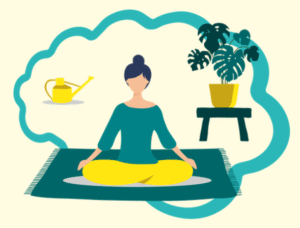
One way would be to consciously be aware of your senses. Once you’re comfortable, close your eyes and then focus on each of your other senses. Notice what the carpet, mat or duvet feels like beneath you. What can you hear? What you can smell? Is there any particular taste in your mouth?
4. Start your meditation
With your eyes closed, simply breathe in while saying “breathe in” in your head as you do. Then breathe out and say “breathe out”. For the next 20 minutes or so, your aim is to focus on this circular breath and the simple words in your head as much as possible.
5. The challenge of focusing the mind
It’s important to remember that a wandering mind is a natural part of meditation practice. It’s not a failure, just part of learning – and even people with lots of experience of meditating will still have wandering minds sometimes. The challenge is to notice when we get distracted by a thought and consciously bring our minds back to focus on the breath.
6. Get the hang of meditation
Mastering meditation takes practice. Here’s how to manage some of the difficulties you may face when meditating.
7. Bring your meditation to a close
It’s important not to finish meditating too suddenly. When you feel it’s time to end, stop repeating the words and focusing on the breath, but stay in the same position with your eyes closed for a couple more minutes. Once you feel ready, gently open your eyes. Stay seated for a little longer before getting up. Ending a meditation like this gives you a calm transition into the next part of your day.